

Indiana Attorneys Guide Managed IT/Cybersecurity & Compliance Tech365
Selecting the right IT partner is an imperative strategic decision for Indiana law firms. Technology underpins critical functions such as case management, client confidentiality, and daily operations. Therefore, your IT provider must deliver comprehensive, proactive managed services, robust cybersecurity defenses, and rigorous compliance support—not merely reactive break/fix solutions. This authoritative guide delineates the essential services, protections, and cloud and recovery options that every reputable firm should demand from its IT partner.
Implementing the appropriate technology solutions represents both a significant challenge and a transformative opportunity for firms committed to modernizing their operations while upholding the highest professional standards.
Technology Adoption & Efficiency for Law Firms
Law firms frequently encounter difficulties keeping pace with rapid technological advancements while simultaneously satisfying escalating client expectations. Since deregulation in jurisdictions such as the U.S. and the U.K., many firms have been compelled to fundamentally reassess their service delivery models and organizational structures. The legal sector is characterized by its diversity, tradition, and complexity—factors that can impede operational efficiency—yet it remains a cornerstone of the global economy warranting rigorous analysis.
Innovation Adoption as a Vehicle for Operational Efficiency Enhancement in the Legal Service Management, K Michalakopoulou, 2021
Which Managed IT Services Are Essential for Indiana Law Firms?
Managed IT services are foundational to ensuring operational reliability and safeguarding sensitive data. Every firm should insist on the following core offerings from their IT provider:
- 24/7 Monitoring: Continuous, real-time oversight designed to identify and resolve issues proactively before they impact firm productivity.
- Data Backup and Recovery: Automated, rigorously tested backup solutions coupled with comprehensive recovery plans to guarantee rapid restoration of critical files following hardware failures or cyber incidents.
- Cybersecurity Measures: Multi-layered defense architectures—including advanced firewalls, anti-malware systems, and stringent access controls—specifically engineered to protect highly sensitive legal information.
These services substantially mitigate operational risks, enabling attorneys to concentrate fully on client representation rather than technology troubleshooting.
What Benefits Do Managed IT Services Offer to Attorneys?
A highly capable managed IT partner delivers far beyond mere repairs. Attorneys should expect the following strategic advantages:
- Enhanced Operational Efficiency: Stable, well-maintained systems that maximize billable hours by minimizing downtime and technical disruptions.
- Predictable and Transparent Costs: Fixed monthly fees that facilitate accurate budgeting and eliminate unexpected expenses.
- Proactive and Expert Support: Continuous monitoring and timely patch management that preemptively address vulnerabilities, thereby preventing outages and security breaches.
These benefits collectively translate into streamlined operations and superior client service delivery.
How Does 24/7 Monitoring Support Law Firm IT Needs?
Uninterrupted monitoring accelerates issue detection and resolution, significantly reducing downtime and minimizing the operational impact of incidents. It also enables early identification of suspicious activities, thereby strengthening your firm’s security posture and safeguarding time-sensitive legal matters.
- Accelerated Issue Resolution: Immediate alerts facilitate prompt investigation and remediation.
- Minimized Operational Interruptions: Early detection prevents many technical failures from disrupting workflows.
- Heightened Security: Continuous surveillance detects anomalies before data breaches can occur.
What Cybersecurity Measures Protect Indiana Attorneys' Sensitive Data?
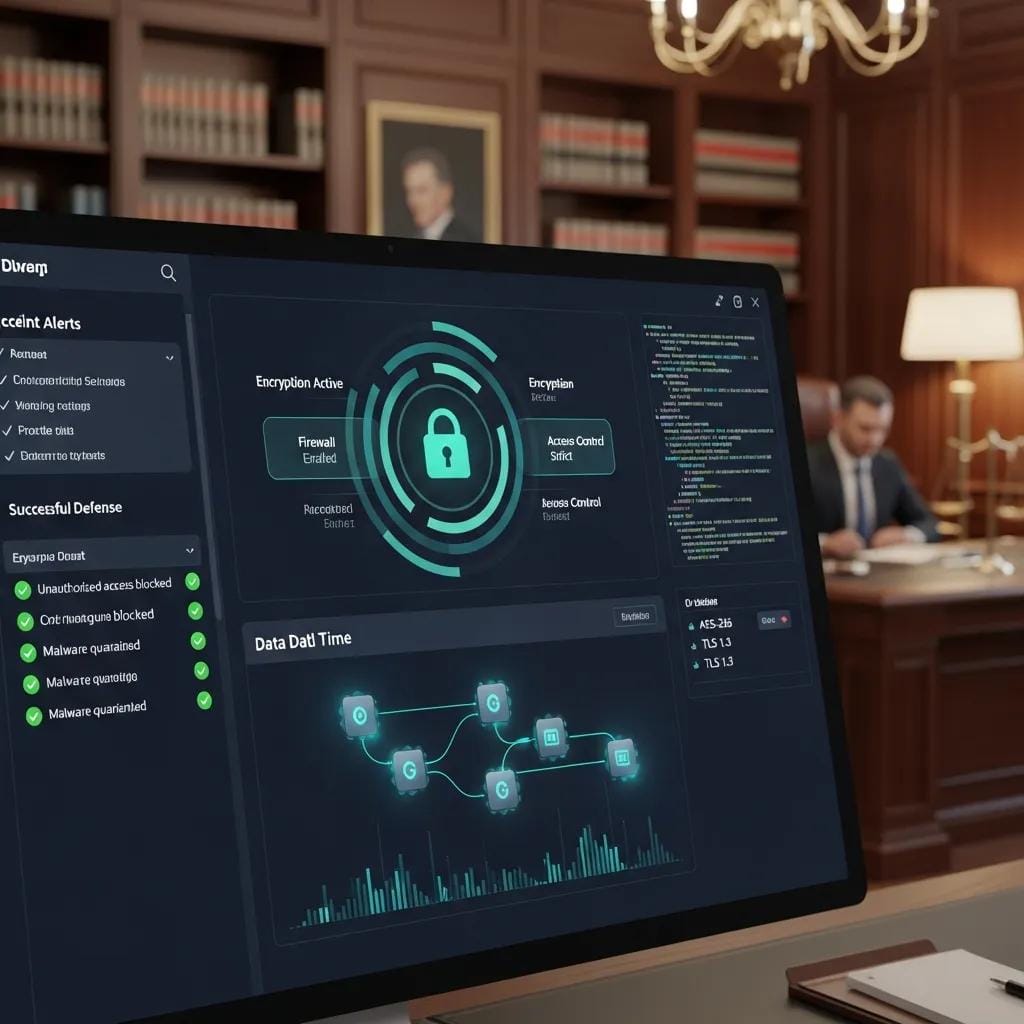
Maintaining client confidentiality is a non-negotiable legal and ethical obligation. Effective cybersecurity frameworks for law firms encompass:
- Proactive Monitoring Tools: Continuous, comprehensive scanning of networks and system logs to detect and respond to anomalies swiftly.
- Data Encryption: Robust encryption protocols applied both at rest and in transit to prevent unauthorized data access.
- Access Controls: Strict role-based permissions and least-privilege policies to tightly regulate access to sensitive legal documents.
These critical safeguards uphold client trust and significantly reduce exposure to regulatory penalties.
Which Cybersecurity Features Are Critical for Legal Practices?
Law firms must demand cybersecurity features tailored to high-risk environments. Essential components include:
- Multi-Factor Authentication (MFA): An additional verification layer that substantially lowers the risk of account compromise.
- Endpoint Protection & Monitoring: Comprehensive security solutions for all devices—including laptops and mobile phones—to prevent threats introduced via end users.
- Secure Backups & Recovery: Immutable or versioned backup systems that enable rapid recovery following ransomware attacks or data loss events.
Collectively, these controls establish a resilient defense against sophisticated and evolving cyber threats.
How Do Cybersecurity Services Ensure Compliance with Indiana Legal Standards?
Cybersecurity services are integral to fulfilling regulatory and ethical obligations through layered defenses, rigorous access management, and continuous compliance support such as periodic reviews and detailed documentation. Partnering with an experienced IT provider ensures access to the technical expertise and procedural rigor necessary for compliance.
Remaining current with evolving data privacy and cybersecurity regulations is essential to maintaining legal and ethical standards.
Cybersecurity & Data Privacy Laws for Attorneys
Digital technologies permeate virtually every aspect of modern legal practice, rendering cybersecurity and data privacy paramount concerns. Governments, corporations, and individuals depend on digital infrastructures that are inherently vulnerable to breaches and misuse. This comprehensive review examines shifting legal frameworks and emerging best practices for data protection and incident response.
CYBERSECURITY AND DATA PRIVACY LAWS: EMERGING TRENDS AND GLOBAL BEST PRACTICES, 2025
How Can Cloud Solutions Enhance IT Support for Indiana Law Firms?

Cloud computing services streamline IT management and significantly enhance operational agility. Key benefits include:
- Flexibility and Scalability: Rapidly scale users, storage, and services in alignment with firm growth and evolving needs.
- Reduced Infrastructure Costs: Minimize reliance on costly on-premises servers by transitioning to predictable, subscription-based operating expenses.
- Enhanced Collaboration: Secure cloud platforms enable seamless file sharing and remote work capabilities, fostering greater team productivity.
When implemented strategically, cloud solutions bolster firm resilience and simplify IT administration.
Cloud adoption has become an indispensable strategy for firms seeking to elevate efficiency and client accessibility.
Cloud Technology Adoption for Law Firms
Initially, many solo and small law firms hesitated to embrace cloud technologies due to concerns over security and control. However, secure cloud platforms have demonstrated their reliability, scalability, and cost-effectiveness, making them the preferred choice for legal practices requiring modern tools without substantial capital expenditure.
“Soaring through the Cloud”: Why It Is Necessary to Adopt the Cloud in Law Firms, 2023
What Are the Advantages of Secure Cloud Computing for Attorneys?
Secure cloud environments confer significant strategic advantages:
- Cost Efficiency: Reduced upfront hardware investments combined with flexible subscription pricing models.
- Scalability: Dynamic resource allocation to meet fluctuating workload demands.
- Advanced Security: Leading cloud providers deploy sophisticated security controls and dedicated teams that exceed the capabilities of most in-house IT departments.
These advantages empower firms to mitigate risk effectively while focusing on superior client service.
How Does Cloud Support Facilitate Disaster Recovery for Law Firms?
Cloud-based disaster recovery solutions are critical for operational resilience, offering automated backups, expedited restoration processes, and cost-effective recovery options without the need for duplicative physical infrastructure. These capabilities enable firms to resume full operations swiftly following disruptive incidents.
- Automated Backups: Scheduled, managed backups that safeguard against catastrophic data loss.
- Rapid Recovery: Accelerated restoration of critical services and data.
- Cost-Effective Solutions: Recovery options that avoid the expense of maintaining duplicate infrastructure.
What Compliance and Data Protection Should Indiana Attorneys Expect from IT Providers?
A trustworthy IT partner must deliver a comprehensive compliance framework encompassing technical safeguards, systematic risk assessments, and ongoing compliance support—including documentation, audits, and updates—tailored specifically to the unique workflows of legal practices.
- Technical Safeguards: Encryption, continuous monitoring, and access controls precisely aligned with legal operational requirements.
- Regular Risk Assessments: Scheduled evaluations to identify and remediate vulnerabilities proactively.
- Continuous Compliance Support: Detailed documentation and audit processes designed to satisfy stringent legal and ethical mandates.
These services are essential to minimizing exposure to regulatory infractions and ethical breaches.
Which Legal IT Compliance Standards Must Providers Meet?
IT vendors must demonstrate readiness to comply with critical standards, including:
- HIPAA Compliance: For firms managing protected health information, systems must fully adhere to HIPAA privacy and security regulations.
- Data Protection Laws: Strict compliance with all relevant state and federal statutes governing sensitive data.
- Ethical Obligations: Implementation of policies and procedures that rigorously uphold attorney-client privilege and confidentiality.
These standards should be thoroughly verified during the vendor selection process.
How Do IT Providers Assist with HIPAA and Other Relevant Regulations?
Leading IT providers integrate advanced technology, comprehensive training, and robust processes to ensure ongoing compliance:
- Deployment of Appropriate Security Controls: System configurations that meet or exceed regulatory requirements.
- Provision of Staff Training: Role-specific education programs that ensure personnel adhere to compliance protocols.
- Conducting Regular Audits: Continuous compliance reviews and meticulous documentation to demonstrate adherence.
This integrated approach enables firms to maintain a defensible compliance posture and adapt to regulatory changes.
To explore customized IT solutions designed specifically for legal practices, consider reviewing our comprehensive suite of IT services.
For scalable, secure infrastructure tailored to your firm’s needs, learn more about our cloud support offerings.
Numerous law firms have already leveraged advanced technology to reduce costs, enhance file accessibility, and deliver superior client service.
Frequently Asked Questions
What should attorneys consider when evaluating potential IT providers?
Attorneys should select providers with demonstrable law firm expertise, comprehensive compliance documentation, and a full managed-services portfolio encompassing monitoring, backups, security, and support. Inquire about response times, disaster recovery capabilities, and references from established legal clients.
How can attorneys ensure their IT provider is compliant with legal standards?
Request verifiable certifications and detailed compliance procedures, insist on regular audits and vulnerability assessments, and verify documented policies governing data handling and ongoing staff training.
What role does employee training play in cybersecurity for law firms?
Employee training constitutes a primary defense against phishing and social engineering attacks. Regular, practical training sessions combined with technical safeguards reduce human error and empower staff to serve as an active security layer.
How can law firms assess the effectiveness of their cybersecurity measures?
Employ periodic audits, vulnerability scans, and penetration testing. Monitor system logs, conduct incident response drills, and consider independent third-party evaluations to obtain an objective assessment.
What are the potential risks of not investing in managed IT services?
Without managed IT services, firms face elevated risks of data breaches, prolonged downtime, unpredictable repair costs, data loss, and potential compliance violations that can severely damage reputation and result in significant penalties.
How do cloud solutions improve data security for law firms?
Cloud providers implement robust encryption, centralized access controls, dedicated security teams, consistent backups, and thoroughly tested recovery procedures—often delivering superior security and business continuity compared to unmanaged on-premises environments.
Conclusion
Choosing the right IT provider is a critical strategic imperative for Indiana attorneys. Seek a partner that delivers proactive managed services, comprehensive cybersecurity, and documented compliance support to ensure your firm protects client data and maintains uninterrupted operations. When you are prepared to fortify your technology infrastructure and mitigate risk, contact us to discuss tailored solutions designed specifically for legal practices.